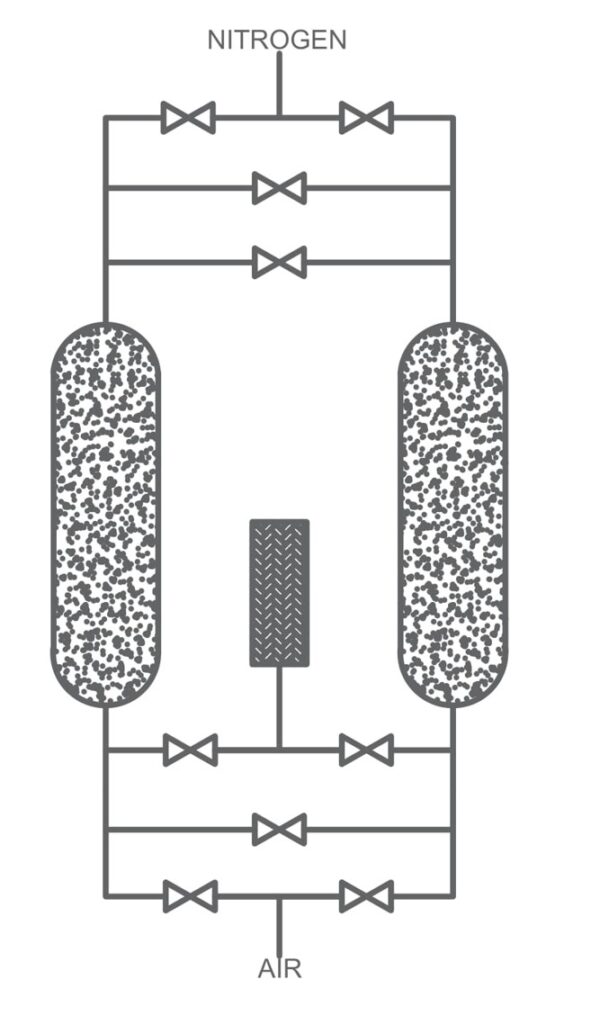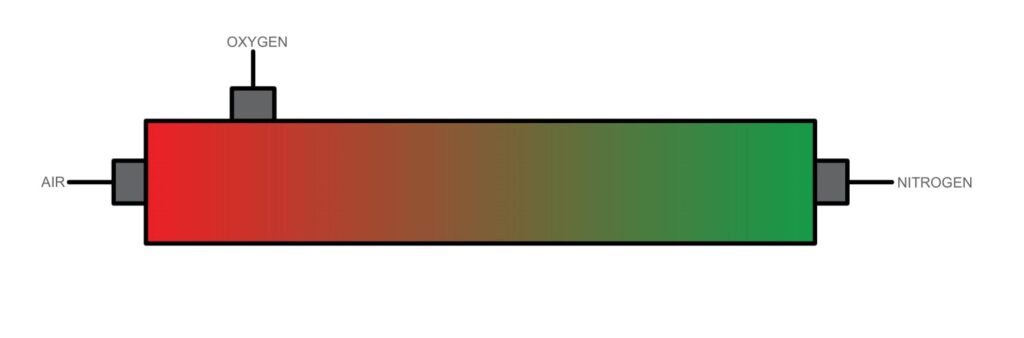

Nitrogen gas generation using PSA (Pressure Swing Adsorption) or Membrane Technology has become the preferred choice for many industries, offering a reliable, on-demand, and cost-effective alternative to bulk liquid or cylinder supplies. However, one often overlooked but critically important parameter in on-site nitrogen gas generation is dewpoint — a direct measure of the dryness of the gas. Dewpoint impacts not only the performance of the nitrogen generator but also the quality and reliability of your downstream processes. Ensuring the right upstream air-drying technology is selected is essential to achieving the required nitrogen dewpoint for your application.
WHY DEWPOINT MATTERS IN NITROGEN GAS GENERATION
When generating nitrogen gas on-site via PSA or membrane systems, the dewpoint of the feed compressed air directly affects the purity, stability, and dryness of the nitrogen gas produced. A poor or unstable dewpoint can lead to:
- Moisture breakthrough in adsorption beds (for PSA systems), reducing nitrogen purity and damaging the adsorbent.
- Reduced membrane efficiency and increased risk of fouling (for membrane systems).
- Corrosion or contamination in sensitive downstream equipment or processes.
For many industrial processes, nitrogen gas dewpoint must be consistently maintained to avoid product defects, compromised quality, or even safety hazards.
SELECTING THE CORRECT AIR-DRYING TECHNOLOGY: REFRIGERATED VS DESICCANT DRYERS
Non-critical applications: Refrigerated dryers
For many general industrial uses — such as nitrogen purging of tanks, inerting, tire filling, or certain packaging lines — a dewpoint of +3 to +5°C achieved by a refrigerated air dryer is sufficient. These systems remove enough moisture to protect the nitrogen generator and meet typical process needs at a lower capital and operational cost.
Critical applications: Desiccant dryers
However, processes such additive manufacturing (3D printing), electronics, pharmaceutical production, or specialty chemical processes demand very low dewpoints (e.g., -40°C to -70°C) to ensure ultra-dry nitrogen gas. Here, using a desiccant (twin tower) air dryer upstream of the nitrogen generator becomes essential. It prevents moisture from entering and saturating the nitrogen generator’s adsorption beds or membranes, preserving purity, extending lifespan, and ensuring gas delivered to critical processes is dry enough to meet stringent specifications.
ARE INBUILT DESICCANT DRYERS IN psa NITROGEN GENERATORS A GOOD IDEA?
Some nitrogen generator designs incorporate small, integrated desiccant dryers to polish or “final dry” the gas. While this might seem attractive, it often proves to be a design mistake for most industrial users.
- These inbuilt dryers typically have limited capacity, are difficult to monitor and service, and can add unnecessary complexity to the nitrogen system.
- They may give a false sense of security, while the actual problem (inadequate upstream air drying) persists.
- For high flow, high duty-cycle applications, a properly sized external desiccant dryer upstream of the nitrogen generator is more reliable, easier to maintain, and ensures both the nitrogen purity and dewpoint meet specifications consistently.
HOW CANADA GAS SOLUTIONS HELPS YOU GET IT RIGHT
At Canada Gas Solutions, we understand that each application has unique nitrogen purity and dewpoint requirements. Whether you’re using nitrogen for food packaging, laser cutting, pharmaceuticals, or oil & gas operations, we:
-Analyze your process requirements to determine the ideal nitrogen purity, pressure, flow and dewpoint.
– Engineer the correct upstream drying solution — refrigerated or desiccant — to protect your PSA or membrane nitrogen system.
– Ensure your delivered nitrogen meets or exceeds specifications, maximizing quality, reliability, and cost savings.
-Provide field-proven, energy-efficient systems backed by expert service and support.
Dewpoint is a critical parameter in nitrogen generation that directly affects your gas quality and your process. Choosing the right drying technology upstream of your PSA or membrane nitrogen generator is not optional — it’s essential. Avoid shortcuts like undersized or integrated dryers that often fail in demanding conditions.
Let Canada Gas Solutions design a turnkey nitrogen generation and drying solution that’s tailored to your project, ensuring you achieve worry-free operation, lower costs, and superior process outcomes.
Enquire Now