Categories
OXYGEN

UNDERSTANDING BUILDING BLOCKS OF AN OXYGEN GAS GENERATING SYSTEM

Oxygen gas generating systems are vital for industries such as healthcare, aquaculture, metallurgy, chemical processing, glass manufacturing, and wastewater treatment. These systems provide a cost-effective, sustainable, and reliable on-site source of oxygen, eliminating the need for frequent cylinder replacements or liquid oxygen deliveries. To understand how they work, it’s important to explore the core components that make up these systems.

AIR COMPRESSOR: THE STARTING POINT

The process begins with the air compressor, which draws in ambient air and compresses it to the pressure required for downstream operations. Depending on the application, oil-lubricated or oil-free compressors are selected. Matching the compressor capacity to the oxygen generator’s requirements is critical for efficient and reliable performance.

AIR DRYER: REMOVING MOISTURE

Compressed air contains water vapor that can damage equipment and reduce oxygen generator efficiency. Air dryers remove this moisture to ensure reliability. Refrigerated dryers are sufficient for standard requirements, while desiccant dryers are required when ultra-dry air is needed for high-purity oxygen applications.

AIR RECEIVER TANK

Compressed air exiting the compressor has pressure pulsations. An air receiver tank is installed to buffer these pulsations before the air enters the oxygen generator. Moisture collected in the receiver is automatically drained through an Auto Drain Valve.

OIL AND WATER SEPARATOR: CONDENSATE TREATMENT

The compressed air system produces condensate containing oil and water. An oil-water separator treats this condensate, ensuring compliance with environmental regulations while maintaining system efficiency and sustainability.

FILTRATION FOR GAS PURITY

Air filtration ensures contaminants are removed before the air reaches the oxygen generator. Coalescing filters remove oil and water aerosols, particulate filters capture fine particles, and activated carbon filters eliminate hydrocarbon vapors. This multi-stage filtration ensures the delivery of clean, high-quality oxygen gas.

OXYGEN GENERATOR: THE CORE COMPONENT

The oxygen generator is the heart of the system, where oxygen is separated from compressed air. Two main technologies are commonly used:

  • Pressure Swing Adsorption (PSA): Uses zeolite molecular sieves to selectively adsorb nitrogen from compressed air, leaving oxygen. PSA systems are well-suited for high-purity oxygen applications, typically up to 96%.
  • Vacuum Pressure Swing Adsorption (VPSA): Operates at lower pressures with higher efficiency for large-scale oxygen production.
OXYGEN RECEIVER TANKS: ENSURING STEADY SUPPLY

Oxygen generating systems typically include two storage tanks:

  • Air Receiver Tank: Buffers fluctuations in compressed air demand and ensures consistent feed to the oxygen generator.
  • Oxygen Receiver Tank: Stores generated oxygen and supplies a steady flow to downstream applications.
ADVANCED CONTROL SYSTEMS

Modern oxygen generators are equipped with control panels that monitor and manage operating parameters such as purity, pressure, and flow rate. PLCs and touchscreen interfaces allow automation, easy operation, and remote monitoring for added convenience.

PIPING AND VALVES: SEAMLESS INTEGRATION

High-quality piping and valves ensure efficient, leak-free distribution of oxygen gas. Using corrosion-resistant and medical-grade materials is especially important in healthcare and high-purity applications.

PRESSURE REGULATION

Pressure regulators maintain stable delivery pressure, protecting sensitive equipment and ensuring consistent oxygen supply for critical applications.

OXYGEN ANALYZER: ENSURING STANDARDS

Oxygen analyzers continuously measure purity levels to confirm compliance with industry or medical standards. This ensures the system delivers the required oxygen concentration for its intended application.

OPTIONAL ACCESSORIES

Optional features can enhance performance and monitoring, such as:

  • Oxygen flow meters to track consumption
  • Purity and pressure alarms for safety
  • Remote monitoring for real-time operational oversight
THE COMPLETE SOLUTION

Oxygen gas generating systems are sophisticated assemblies designed to reliably and efficiently deliver high-purity oxygen at the point of use. Each component plays an essential role, making it critical for businesses to understand how these systems function and how they can be tailored to their needs.

At Canada Gas Solutions, we specialize in designing and delivering oxygen gas generating systems tailored to meet the specific requirements of each customer. From selecting the right components to ensuring compliance with industry standards, we provide efficient, reliable, and sustainable oxygen generation solutions.

Enquire Now
    Categories
    ON-SITE GAS GENERATION

    WHAT MAKES CANADA GAS SOLUTIONS’ ONSITE NITROGEN & OXYGEN GENERATING SYSTEMS A 24/7 POWERHOUSE ACROSS INDUSTRIES

    In today’s demanding industrial landscape, reliability isn’t optional—it’s essential. Whether it’s food packaging, laser cutting, aquaculture, or electronics manufacturing, uninterrupted gas supply can mean the difference between optimized performance and costly downtime. At Canada Gas Solutions, we engineer our onsite Nitrogen and Oxygen gas generating systems to operate 24/7. At the core of this performance lies a critical element: our process valves.

    ENGINEERED FOR PERFORMANCE: THE VALVE ADVANTAGE

    Each of our systems requires rapid valve cycling—as often as every 60 seconds or faster, depending on the application. That’s a demanding duty cycle, and it’s why we’ve made the careful selection of valves a priority in our system design.

    We use high-performance stainless steel angle piston valves, sourced from world-renowned manufacturers, chosen for their:

    • Fastest response time in class—essential for tight process control
    • Robust stainless-steel construction (MOC)
    • Exceptional reliability in high-frequency switching environments
    • Ease of maintenance with minimal downtime
    • Lowest cost of ownership & maintenance over time
    • Design life of 10+ years in continuous duty operation

    These valves are not just parts—they’re the foundation of a system you can count on day and night, year after year.

    QUALITY IN EVERY DETAIL

    Canada Gas Solutions takes pride in meticulous subcomponent selection. Our systems are built to perform for decades, and that starts with using only premium-grade materials. From valves to sensors and PLCs, each part is selected to meet the demands of tough industrial applications. When you build systems for mission-critical industries, you don’t compromise—and neither do we.

    BUILT FOR THE LONG HAUL

    With Canada Gas Solutions, you’re not just buying a gas generator. You’re investing in a field-proven, custom-engineered system designed to deliver uninterrupted performance, minimal maintenance, and long-term dependability. When the pressure’s on and uptime matters, our systems are ready—valve by valve, system by system.

    If you’re planning an onsite Nitrogen or Oxygen gas generating system for your plant or a project, contact Canada Gas Solutions to feel the difference.

    Enquire Now

      Categories
      ON-SITE GAS GENERATION

      FUTURE READY GAS GENERATION: THE FIELD EXPANDABLE SYSTEM (FES) ADVANTAGE BY CANADA GAS SOLUTIONS

      In the evolving landscape of industrial manufacturing, one thing is certain—your operation’s gas demand won’t stay the same forever. Whether you’re in food packaging, aquaculture, electronics, chemical processing, or pharmaceuticals, increased production capacity often brings an increase in nitrogen or oxygen gas requirements. That’s why Canada Gas Solutions has engineered the Field Expandable System (FES) — a scalable and future-ready solution for onsite PSA nitrogen and oxygen gas generation.

      WHAT IS THE FIELD EXPANDABLE SYSTEM (FES)?

      The FES is a unique, PSA gas generator design that allows customers to expand gas output capacity by simply adding additional adsorber towers to the existing system frame—without having to purchase a completely new standalone system. This innovation is aimed at supporting businesses that anticipate growth but want to avoid redundant investments and system overhauls in the future.

      HOW FES SYSTEMS COMPARES TO CONVENTIONAL MODULAR SYSTEMS

      Most gas generation systems on the market today are limited in scale or will provide limited scalability. By contrast, Canada Gas Solutions’ FES design allows your system to grow with your operations. Whether you need to double, triple, or even quadruple your system’s flowrate, you can do so seamlessly—by simply integrating new adsorber towers into your existing system frame.

      REAL-WORLD COST COMPARISON: FES VS. CONVENTIONAL SYSTEMS

      Let’s break it down with an example:

      • A twin tower psa nitrogen generator system might cost approximately $47,000 CAD for a medium range flowrate application/project.
      • If your production needs to double in two years, buying another unit would bring your total investment to around $94,000 CAD.

      Now consider a Field Expandable System:

      • The initial cost of an FES unit capable of 2x expansion may be slightly higher—around $50,000 CAD.
      • When the time comes to expand, you only need to invest $28,000 CAD to add another set of adsorber towers, make necessary piping modifications, reconfigure the control system, and commission the updated system.

                   Total cost with FES: $78,000 CAD
                   Compared to conventional: $94,000 CAD


      Not to mention lower installation overhead and zero duplication of controllers & controls, valves, piping or system frames. Note : This is an example for explanation only. Actual savings vary based on system size and application requirements.

      DESIGNED FOR OPERATIONAL FREEDOM AND LOWER MAINTENANCE COSTS

      Another key advantage of Canada Gas Solutions’ FES design is that it’s built entirely using non-proprietary components. This gives end users the freedom to maintain and service the system themselves, without being tied to a single-source vendor. Parts are widely available, and maintenance can be handled by in-house teams or local service providers—helping to keep long-term maintenance costs as low as possible.

      This level of independence and flexibility is rarely found in proprietary modular systems, which often lock customers into expensive service contracts and limited parts availability.

      SCALABLE COMPRESSION & ENERGY EFFICIENCY

      Designing for future expansion also means planning compressor capacity wisely. FES system performs best when paired with:

      • A compressor system with turn-down/turn-up capability to optimize energy usage during varying demand, or
      • A scalable approach, where additional compressors can be added in the future as more adsorber towers are integrated.

      This ensures the entire system grows efficiently and cost-effectively with your production requirements.

      A SMARTER LONG-TERM INVESTMENT

      FES systems are designed with the end user’s growth, flexibility, and cost-efficiency in mind. By investing in a scalable system from day one, you avoid unnecessary duplication, reduce capital, and eliminate the logistical headaches of installing entirely new PSA systems down the line.

      Whether you’re planning an expansion in 6 months or 3 years, the Field Expandable System by Canada Gas Solutions gives you the flexibility and confidence to grow without overcommitting resources too early.

      Reach out to Canada Gas Solutions to learn more about our Field Expandable System designs for onsite PSA nitrogen and oxygen generation. Let us show you how smart planning today can save you real money, time, and effort tomorrow.

      Enquire Now

        Categories
        ON-SITE GAS GENERATION

        A BUYER’S GUIDE: WHAT TO EVALUATE BEFORE INVESTING IN AN ON-SITE NITROGEN OR OXYGEN GAS GENERATING SYSTEM

        Purchasing an on-site gas generating system—whether for nitrogen or oxygen — is a strategic investment that can reduce reliance on delivered gases, cut long-term costs, and improve operational control. However, choosing the right system involves more than comparing prices. Here’s a detailed look at the critical factors you should evaluate to make an informed decision.

        IS THE SYSTEM DESIGNED TO MEET YOUR PROCESS REQUIREMENTS AND DOES IT MEET YOUR CURRENT & FUTURE NEEDS?

        This is the most important question. The system must reliably deliver the required gas purity, flow rate (SCFM or Nm3/hr), pressure (PSIG or Barg) and dewpoint (Deg C) that your process demands today, while also having the flexibility or capacity to handle any foreseeable increases in demand. Always review detailed technical proposals, including data sheets and performance guarantees, to ensure the system aligns with both your immediate process needs and your future growth plans.

        CAN THE SYSTEM FOOTPRINT BE ACCOMMODATED WITHIN YOUR FACILITY?

        Space is often a constraint, especially in existing plants. Check:

        • The physical dimensions of the system.
        • Required clearances for maintenance access.

        A well-designed system proposal should come with a detailed system P & ID and layout drawing that allows you to visualize integration into your existing facility or help you plan for external infrastructure if required.

        WHAT IS THE COST TO BUY THE SYSTEM OUTRIGHT, THE ASSOCIATED SYSTEM ERECTION & INSTALLATION COST, ELECTRICAL SCOPE, INSPECTION REQUIREMENTS IF ANY & COMISSIONING COST?

        Look beyond just the base price of the gas generator. A complete on-site system investment should include:

        • The outright purchase cost of the gas generator along with required compressor, dryer, filtration, and storage tanks.
        • System erection & installation costs, including structural work if any, mechanical piping from onsite gas generation system to point of use.
        • Electrical scope, such as power distribution upgrades, cabling, and integration with existing control systems.
        • Any mechanical or electrical inspection requirements that may be mandated by local codes.
        • Commissioning costs, covering final system checks, performance validation, and training for your operations & maintenance team.
        HOW POWER EFFICIENT IS THE SYSTEM & SYSTEM’S RUNNING COST?

        The largest operating cost over the system’s lifetime is typically power.

        Review:

        • Power consumption of the system in kWh(kilowatt-hour). Calculate system running cost based on hours of operation per day and based on energy rates in your area or based on your contract with your energy supplier.

        Example running cost calculation:

        A 40 HP (30 kW) compressor running 8 hours/day consumes 240 kWh/day.
        At $0.12/kWh, that’s $29/day or ~$8,500/year just for electricity.

        • Explore energy-saving features like variable speed drives on air compressors, purge economizers on dryers, or automatic shutdown modes when there is no gas demand for the process.
        WHAT IS THE YEARLY MAINTENANCE COST?

        Ask for an estimated annual maintenance budget, covering:

        • Filter element replacements & any other system consumables.
        • Lubricants and service kits for air compressors.

        A good supplier should give you at least a 2-year maintenance spare cost estimate upfront.

        HOW EASY IS THE SYSTEM TO MAINTAIN?
        • Can your internal plant maintenance team handle routine services (filter element changes & replacement of system consumables)?
        • Does it require specialized technicians from the manufacturer for even minor tasks?

        Look for systems with simplified designs and clear maintenance instructions.

        ARE SPARE PARTS NON-PROPRIETARY AND READILY AVAILABLE?

        This is critical for long-term independence and avoiding downtime:

        • Does the system use standard off-the-shelf filters, valves, and controls, or are you locked into buying proprietary parts?
        • How quickly can common wear parts be shipped to you?
        ASK FOR A LIST OF RECOMMENDED CRITICAL SPARE PARTS for the system

        A reliable supplier should provide you with a recommended list of critical spare parts to keep on hand. This helps ensure that in case of unexpected failures or routine wear, you can minimize downtime.

        • This list typically includes valves, sensors, and control components most subject to wear.
        • Knowing upfront what parts are recommended—and their costs—also helps you plan your spare parts inventory and maintenance budget.

        It’s a simple but crucial step to keep your system running reliably and reduce the risk of unplanned shutdowns.

        Choosing an on-site gas generating system is more than a product purchase—it’s an operational partnership. By carefully assessing how well the system fits your process specs, space, operating costs, maintenance needs, and long-term support, you’ll ensure a reliable and cost-effective supply of gas for years to come. If you’re planning an on-site gas generation project and want a tailored assessment, reach out to us at Canada Gas Solutions Inc. We specialize in designing turnkey nitrogen, oxygen, and hydrogen systems, ensuring they’re perfectly matched to your facility and process.

        Enquire Now

          Categories
          MANUFACTURING

          CONTROL SYSTEM DESIGN & MANUFACTURING FOR ON-SITE GAS GENERATING SYSTEMS: THE CANADA GAS SOLUTIONS ADVANTAGE

          At Canada Gas Solutions Inc., we believe that the heart of any onsite gas generating system—whether it’s nitrogen, oxygen, or hydrogen—is its control system. A robust, intelligently designed control system is what ensures your onsite gas solution delivers consistent performance, exceptional reliability, and operational safety throughout its lifespan.

          IN-HOUSE EXPERTISE: FROM DESIGN TO CERTIFICATION

          Unlike many in the industry who outsource critical elements, Canada Gas Solutions designs, builds, programs, tests, and certifies our control systems entirely in-house. This end-to-end control allows us to uphold the highest standards of quality and customization.

          Our electrical control panels are meticulously engineered and manufactured in compliance with UL 508A & CSA, ensuring they meet the stringent requirements for industrial control panels in North America. These panels are also suitable for deployment globally, offering flexibility for customers with international operations. Beyond internal quality controls, our systems undergo rigorous third-party certifications by agencies such as QPS, LabTest Certification, cULus, and CSA. This guarantees that every control system shipped from our facility is fully compliant with regulatory standards and safe to install and operate.

          BUILT LIKE A POWERHOUSE: RELIABILITY FOR THE LONG RUN

          Our philosophy is simple: your onsite gas generating equipment should run for decades without unexpected failures, and the control system must be equally resilient. We achieve this by:

          • Using only premium components from trusted brands. This minimizes the risk of early component failures and reduces lifetime maintenance costs.
          • Engineering our systems with future serviceability in mind, ensuring ease of troubleshooting, upgrades, or expansions.

          These robust designs translate into fewer downtimes, optimized performance, and maximum return on investment for our customers.

          SMART, FLEXIBLE, AND READY FOR INDUSTRY 4.0

          Canada Gas Solutions’ control systems are designed to integrate seamlessly into your facility’s operational framework. Our panels feature:

          • Easy interfacing of digital inputs/outputs and analog I/O signals, making integration with various sensors and field instruments straightforward.
          • Data logging capabilities that help in maintaining quality control records, tracking performance trends, and supporting predictive maintenance initiatives.
          • Optional Ethernet and Modbus communication modules, enabling our control systems to communicate with your central DCS (Distributed Control System) or SCADA platforms. This ensures real-time visibility, remote diagnostics, and streamlined process control.
          QUALITY WITHOUT COMPROMISE

          Each control panel undergoes comprehensive functional testing in-house. We verify I/O operations, safety interlocks, alarms, communication protocols, and simulate system operations to ensure that once installed on-site, system performs exactly as designed.

          This attention to detail is what makes our control systems for onsite nitrogen, oxygen, and hydrogen generators true powerhouses—built not just to meet today’s demands but to reliably serve for years to come.

          If you are planning for an onsite gas generation project, reach out to Canada Gas Solutions for the best in custom-designed solutions that are engineered to perform and built to last.

          Enquire Now

            Categories
            MANUFACTURING

            WHY PSA ADSORBER VESSEL DESIGN MATTERS FOR ON-SITE NITROGEN & OXYGEN GENERATION — AND HOW CANADA GAS SOLUTIONS ENSURES COMPLIANCE & LONG-TERM PERFORMANCE

            When it comes to onsite nitrogen and oxygen gas generation systems, the heart of the system lies in the Pressure Swing Adsorption (PSA) technology — and at the core of PSA is the adsorber vessel. Designing these vessels is not just an engineering task; it is a critical responsibility that directly impacts the reliability, safety, and longevity of the entire system.

            WHY CARBON STEEL IS THE MATERIAL OF CHOICE

            For PSA systems, adsorber vessels are most commonly fabricated from high-quality carbon steel. This is due to a combination of mechanical, economic, and operational reasons:

            • Strength & Pressure Handling: Carbon steel offers excellent tensile strength, making it ideal to handle the frequent pressure fluctuations inherent in PSA processes.
            • Fabrication Flexibility: It allows precise welding, forming, and machining, ensuring robust construction.
            • Cost Effectiveness: Compared to stainless steel or exotic alloys, carbon steel provides an optimal balance of performance and cost for most nitrogen and oxygen generation applications.
            • Long-Term Durability: When coupled with proper internal linings and external coatings, carbon steel vessels can reliably serve for 20+ years.

            However, material selection alone does not guarantee performance. The design, welding quality, and strict adherence to pressure vessel standards are equally crucial.

            MEETING ASME & CSA CODES — AND PROVINCIAL CRN REQUIREMENTS

            At Canada Gas Solutions Inc., we recognize that adsorber vessels are not ordinary tanks — they are pressure vessels operating under stringent safety regimes. That’s why every PSA adsorber vessel in our systems is:

            -Designed and certified as per ASME Section VIII, Division 1 & CSA B51 pressure vessel codes.These standards govern material selection, wall thickness calculations, nozzle designs, and destructive & non-destructive examination methods to ensure vessel integrity under operating and test pressures.

            -Built exclusively by ASME “U” and CSA certified fabrication shops. This guarantees that every weld, plate, and nozzle meets the highest North American quality standards, verified through detailed documentation and quality control processes. -Registered and compliant with Canadian CRN requirements. Each province and territory in Canada requires a unique CRN (Canadian Registration Number) for pressure vessels.

            WELD QUALITY & 20+ YEAR SERVICE LIFE

            A PSA adsorber vessel undergoes countless pressure cycles — typically switching from high to low pressure several times, amounting to millions of cycles over its life. This makes weld quality and fatigue resistance absolutely critical.

            Our manufacturing partners employ:

            • Certified welders and welding procedures (WPS) tested as per ASME Section IX.
            • 100% radiographic or ultrasonic inspection of critical weld seams upon special request.
            • Hydrostatic testing at 1.3x the design pressure, providing an additional safety margin.

            This meticulous attention to design and manufacturing translates into adsorber vessels capable of 20+ years of continuous operation, ensuring minimal downtime and optimal return on investment for our customers.

            OUR COMMITMENT AT CANADA GAS SOLUTIONS

            When you choose Canada Gas Solutions for your onsite nitrogen or oxygen gas generation systems, you’re not just buying equipment — you’re investing in:

            • ASME & CSA certified pressure vessels, designed for decades of reliable service.
            • Peace of mind with full compliance to all provincial CRN and inspection requirements.
            • Systems engineered to the highest standards, ensuring safety and uninterrupted production.

            If you’re planning a project or looking to upgrade your existing PSA systems, talk to our team to learn more about how we engineer every critical component — starting with the adsorber vessel — for maximum safety, efficiency, and lifespan.

            Enquire Now

              Categories
              ON-SITE GAS GENERATION

              CHOOSING THE RIGHT GAS ANALYZERS FOR ON-SITE NITROGEN, OXYGEN & HYDROGEN GAS GENERATION

              As industries increasingly turn to on-site gas generation systems for nitrogen, oxygen, and hydrogen, the role of reliable gas analyzers becomes critical. These analyzers ensure the generated gas meets the required purity standards, safeguarding downstream processes and guaranteeing product quality.

              THE IMPORTANCE OF GAS ANALYZERS IN ON-SITE GAS GENERATION

              Gas analyzers continuously monitor the purity of gases produced by on-site systems such as PSA (Pressure Swing Adsorption), membrane, or electrolyzer technologies. They enable early detection of process deviations, protect sensitive equipment, and ensure compliance with process specifications. Whether in wastewater treatment using oxygen for aerobic digestion, food packaging with nitrogen, or hydrogen fueling applications, accurate and continuous gas quality verification is non-negotiable.

              SAMPLING SYSTEMS & REQUIREMENTS

              Effective gas analysis starts with a well-designed sampling system. A typical sampling line for gas analysis incorporates:

              • Process isolation ball valve – for safely isolating the analyzer during maintenance.
              • Check valve – to prevent backflow and protect the generator.
              • Pressure regulator – to drop the process pressure to a safe range for the analyzer.
              • Flow meter with needle valve – to control and monitor the sample flow to the analyzer.

              Sampling systems typically require:

              • Sample pressure: usually regulated to 1-5 psi(g), or depending on analyzer specifications.
              • Sample flow rate: typically, in the range of 1 to 10 litre/min, or depending on analyzer specifications. Ensuring steady delivery to the sensor without overloading it.

              Poor sampling design can lead to inaccurate readings or sensor damage due to pressure spikes, moisture, or contamination.

              TYPES OF GAS ANALYZER SENSORS

              1. Zirconia Oxygen Sensors

              • Working Principle: Measure oxygen concentration based on the change in voltage across a zirconium oxide cell at elevated temperatures.
              • Pros:
                • Long lifespan (often 5-10 years).
                • Ideal for high purity oxygen measurement (ppm to % range).
                • Not significantly affected by inert gases.
              • Cons:
                • Sensitive to combustible gases (hydrogen, hydrocarbons) which can create errors.
                • Requires heating, leading to higher power consumption.
                • Slower warm-up time.

              2. Electrochemical (Fuel Cell) Oxygen Sensors

              • Working Principle: Oxygen diffuses through a membrane and reacts electrochemically, producing a current proportional to concentration.
              • Pros:
                • Compact, simple, low power.
                • Fast response time.
                • Lower initial cost.
              • Cons:
                • Limited lifespan (18-24 months typical), affected by oxygen exposure.
                • Requires periodic replacement.
                • Not ideal for very low ppm O2 measurements.

              3. Thermal Conductivity Sensors (TCD)

              • Used for: Hydrogen and sometimes nitrogen purity measurement. Detects changes in thermal conductivity of the sample vs reference gas.
              • Can measure over a wide range.
              • Long life, no consumables.
              EXPERTISE OF CANADA GAS SOLUTIONS INC.

              At Canada Gas Solutions Inc., we understand that your gas purity is critical. That’s why we specialize not only in supplying on-site nitrogen, oxygen, and hydrogen generation systems but also in designing and integrating complete gas analyzer packages.

              Our team helps customers:

              • Select the right sensor technology based on application needs (ppm vs % range, inert vs active gas streams).
              • Design sampling systems with appropriate regulators, valves, flow control and filtration to protect analyzers and ensure accurate readings.
              • Implement analyzer calibration and maintenance plans to maximize uptime and ensure long-term reliability.

              Whether you need continuous monitoring of nitrogen purity in food packaging lines, oxygen measurement for combustion optimization, or hydrogen quality verification for fuel cell systems, Canada Gas Solutions has the expertise to deliver robust and tailored solutions.

              On-site gas generation unlocks significant operational savings and flexibility, but only when coupled with dependable gas quality monitoring. Investing in the right analyzer technology, combined with expert sampling system design, ensures your operations run smoothly and safely.

              For more information on how Canada Gas Solutions can support your nitrogen, oxygen, or hydrogen generation and analysis needs, reach out to us today.

              Enquire Now

                Categories
                NITROGEN OXYGEN

                ONSITE GAS GENERATION VS. TRADITIONAL GAS PROCUREMENT METHODS

                In industrial settings, the need for gases like nitrogen and oxygen is ubiquitous, spanning various applications from manufacturing to healthcare. Traditionally, industrial gas consumers have relied on high-pressure cylinders or bulk liquid tanks to meet their gas requirements. However, the landscape is evolving, with onsite gas generation emerging as a cost-effective and efficient alternative. Let’s explore the pros of onsite nitrogen/oxygen gas generation and the cons of purchasing high-pressure cylinders or bulk liquid tanks, highlighting how industrial gas consumers can save money and achieve a rapid Return on Investment (ROI) within 6-24 months.

                onsite gas generation:

                STATIONARY ON-SITE GAS SYSTEM

                CONTAINERIZED ON-SITE GAS SYSTEM

                Cost Efficiency:

                Onsite gas generation eliminates the need for repeated purchases of high-pressure cylinders or bulk liquid tanks, which often incur transportation, handling, and rental costs. Once the initial investment in onsite gas generation equipment is made, the cost per unit of gas produced significantly decreases, leading to substantial savings in the long run.

                Supply Reliability:

                With onsite generation, companies have greater control over their gas supply, reducing the risk of unexpected shortages or disruptions. This reliability translates into improved operational continuity, ensuring uninterrupted production processes and minimizing downtime.

                Customization & Scalability:

                Onsite gas generation systems can be tailored to specific consumption requirements, allowing companies to produce the exact quantity of gas needed on-demand. Moreover, these systems are highly scalable, enabling businesses to adjust production capacity according to fluctuating demands without relying on external suppliers.

                Safety and Environmental Benefits: Onsite generation eliminates the hazards associated with transporting and handling high-pressure cylinders or bulk liquid tanks. Additionally, it reduces the carbon footprint by minimizing the need for frequent deliveries and decreasing reliance on fossil fuel-powered transportation.

                Traditional Gas Procurement Methods:

                COMPRESSED GAS CYLINDERS

                ON-SITE GAS GENERATION SYSTEM

                LIQUID BULK TANK

                High Operating Cost:

                Purchasing gases in high-pressure cylinders or bulk liquid tanks entails recurring expenses, including rental fees, delivery charges, and handling costs. Over time, these expenses can accumulate, significantly impacting the overall operational budget.

                Supply Chain Vulnerability:

                Reliance on external suppliers for gas procurement exposes companies to supply chain vulnerabilities, such as transportation delays, logistical challenges, and market fluctuations. Any disruption in the supply chain can disrupt operations and lead to costly downtime.

                Storage and Handling Challenges:

                Storing and handling high-pressure cylinders or bulk liquid tanks require dedicated infrastructure and safety measures, which can consume valuable floor space and resources. Moreover, the handling of these containers poses inherent risks to personnel safety.

                Environmental Impact:

                Traditional gas procurement methods contribute to environmental pollution through emissions from transportation vehicles and energy-intensive production processes. Additionally, the disposal of empty cylinders or tanks raises concerns regarding waste management and environmental sustainability.

                Achieving Cost Savings and Return on Investment:

                The transition to onsite gas generation offers a compelling opportunity for industrial gas consumers to optimize their expenditure and realize a rapid ROI within 6-24 months. By investing in modern generation technology, companies can:

                • Minimizing Operational Costs: Eliminate recurring expenses associated with traditional procurement methods, leading to significant cost savings over time.
                • Enhance Operational Efficiency: Improve supply reliability, reduce downtime, and streamline production processes, thereby maximizing overall operational efficiency.
                • Mitigate Risks: Decrease dependency on external suppliers, mitigate supply chain risks, and enhance safety and environmental compliance.
                • Future-Proof Investments: Embrace sustainable practices, reduce carbon footprint, and position themselves for long-term growth and competitiveness in a rapidly evolving market.

                The advantages of onsite nitrogen/oxygen gas generation are clear: cost efficiency, supply reliability, customization, scalability, safety, and environmental benefits. By contrast, traditional gas procurement methods pose challenges in terms of operating costs, supply chain vulnerability, storage, handling, and environmental impact. Industrial gas consumers can achieve substantial cost savings and a rapid ROI by transitioning to onsite generation, thereby unlocking greater efficiency, reliability, and sustainability in their operations.

                Enquire Now
                  Categories
                  NITROGEN OXYGEN

                  THE CRUCIAL ROLE OF COMPRESSED AIR QUALITY IN ON-SITE NITROGEN & OXYGEN GAS GENERATION

                  In industries ranging from pharmaceuticals, food packaging to aquaculture, onsite nitrogen and oxygen gas generation systems have become indispensable. These systems offer efficiency, cost-effectiveness, and a reliable source of gases critical for various applications. However, behind their seamless operation lies a crucial factor often overlooked: compressed air quality. The quality of compressed air used as feedstock profoundly impacts the performance and longevity of nitrogen and oxygen generators. Here, we delve into the significance of compressed air quality and the imperative need for periodic maintenance to ensure optimal system functionality.

                  Understanding Compressed Air Quality:

                  Compressed air serves as the primary feedstock for on-site nitrogen and oxygen gas generators. It acts as the carrier gas for the separation process, facilitating the extraction of nitrogen or oxygen molecules from the surrounding air. However, the quality of compressed air directly affects the purity and efficiency of the generated gases.

                  Importance of Inlet Filtration:

                  Inlet filtration plays a pivotal role in maintaining the purity of compressed air. Contaminants such as dust, oil aerosols, water vapor, and particulate matter present in the compressed air can compromise the performance of on-site gas generation systems. These contaminants, if left unfiltered, can accumulate within the system, leading to fouling of components, decreased efficiency, and potential damage to delicate membranes and adsorbents.

                  Regular maintenance of inlet filtration systems is essential to prevent the ingress of contaminants into the gas generation equipment. High-quality filters, including coalescing filters and particulate filters, effectively remove impurities, ensuring clean and dry compressed air enters the system. By safeguarding against contamination, inlet filtration safeguards the integrity and purity of the generated nitrogen and oxygen gases.

                  Ensuring Correct Dewpoint:

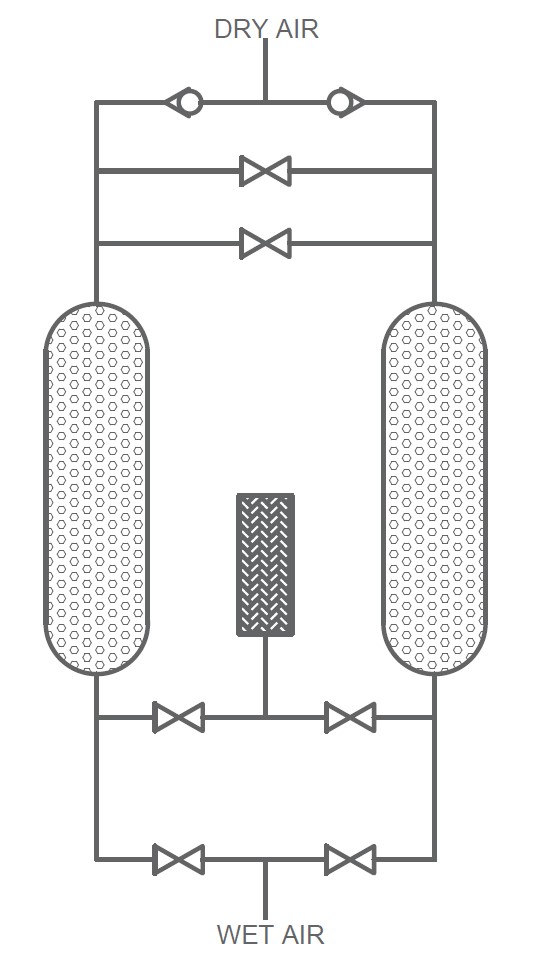
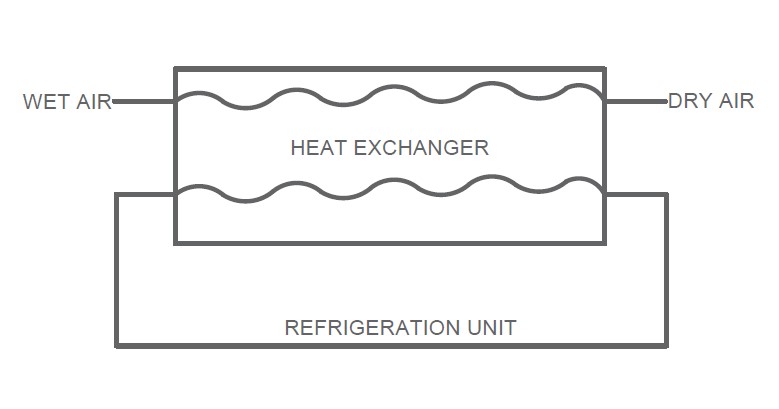
                  REFRIGERATED AIR DRYER

                  DESICCANT AIR DRYER

                  Another critical aspect of compressed air quality is the dewpoint, which measures the moisture content present in the compressed air. Elevated levels of moisture can adversely impact the performance of gas generation systems, particularly those utilizing pressure swing adsorption (PSA) or membrane technology.

                  Excessive moisture in the compressed air stream can lead to the formation liquid water within the system, causing blockages, corrosion, and operational disruptions. Moreover, water vapor can hinder the adsorption process, reducing the efficiency of nitrogen or oxygen separation.

                  Maintaining the correct dewpoint of compressed air is imperative to prevent these issues. Refrigerated or desiccant air dryers are commonly employed to achieve dewpoint levels suitable for gas generation applications. Regular monitoring and maintenance of these dryers ensure that the compressed air supplied to the gas generation system remains within the specified dewpoint range, thereby optimizing system performance and reliability.

                  The need for Periodic Maintenance:

                  Periodic maintenance of compressed air quality is essential to sustain the efficiency and longevity of on-site nitrogen and oxygen gas generation systems. Routine inspection and replacement of inlet filters, along with monitoring and adjustment of dewpoint levels, mitigate the risk of contamination and ensure consistent operation.

                  Failure to maintain proper compressed air quality can result in increased energy consumption, diminished gas purity, and costly downtime due to equipment failures. By prioritizing the quality of compressed air fed into gas generation systems and implementing regular maintenance practices, industries can maximize the productivity and profitability of their onsite gas production operations.

                  In conclusion, the quality of compressed air is a critical factor in the performance and reliability of onsite nitrogen and oxygen gas generation systems. By investing in high-quality inlet filtration and ensuring the correct dewpoint of compressed air, industries can safeguard against contamination and optimize the efficiency of gas separation processes. Periodic maintenance of compressed air quality is essential to prevent operational disruptions and maintain the integrity of gas generation equipment. By prioritizing compressed air quality, industries can harness the full potential of onsite gas generation technology to meet their diverse application needs efficiently and cost-effectively.

                  Enquire Now